
Safety Planning
Catching Danger Early
Eye Pressure Monitoring
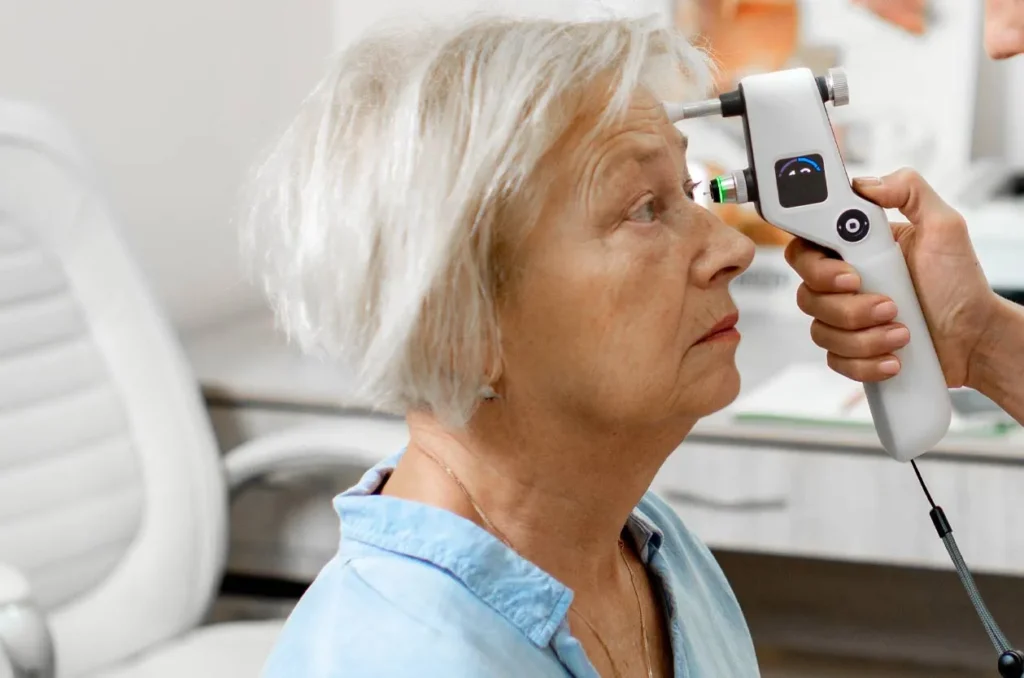
Eye pressure monitoring matters after surgery because intraocular pressure (IOP) can change during healing. Swelling, inflammation, bleeding, or leftover surgical materials may cause pressure to become too high or too low. High pressure can damage the optic nerve and reduce vision, while low pressure can interfere with proper healing. Regular checks help doctors detect complications early and treat them quickly to protect vision.

Warning Signs
Families should know the warning signs of complications after eye surgery so they can seek help quickly. Serious symptoms include sudden vision loss, worsening eye pain, severe redness, flashes of light, many new floaters, or a “curtain” over vision. Other concerns include increasing swelling, discharge, strong headache or nausea (possible high eye pressure), or severe light sensitivity. If any of these signs appear, contact the surgeon or seek emergency care immediately.

Normal Recovery
After eye surgery, some discomfort and temporary changes in vision are common during the healing process. Mild redness, irritation, blurred vision, and sensitivity to light may occur for several days as the eye recovers. Patients may also notice mild swelling or tearing, especially early on. However, recovery should gradually improve over time, not worsen. Understanding what is normal can help patients and families recognize when symptoms may signal a serious complication.

For Doctors and Nurses
Retinal detachment and other post–eye surgery complications require rapid recognition and urgent ophthalmology referral. Patients may present with sudden vision loss, flashes, new floaters, or a “curtain” over the visual field. Increased intraocular pressure can cause eye pain, headache, nausea, redness, or decreased vision. Severe pain, rapidly worsening vision, discharge, or photophobia are key emergency signs. Suspected retinal detachment, acute glaucoma, endophthalmitis, or postoperative pressure crisis should be treated as an emergency with immediate ophthalmologic consultation to prevent permanent vision loss.